Learning to crochet might seem intimidating at first—but I promise, once you get the hang of it, it’s pure magic. Whether you want to make cozy blankets, adorable amigurumi, or stylish bags, everything starts with the basics. So grab your yarn, a comfy chair, and let’s dive into the beautiful world of crochet together.
What Is Crochet, Anyway?
Crochet is a craft where you use a single hook to create fabric from yarn or thread by making loops (called stitches). Unlike knitting, which uses two needles, crochet is done with just one hook—easy to travel with and much more forgiving if you drop a stitch!
It’s relaxing, satisfying, and super versatile. And the best part? You can start creating real projects even as a total beginner.
Tools You Need to Start Crocheting
Let’s talk about what you’ll need to get started. Don’t worry—you don’t need to break the bank. A few basic tools are enough:
1. Crochet Hook
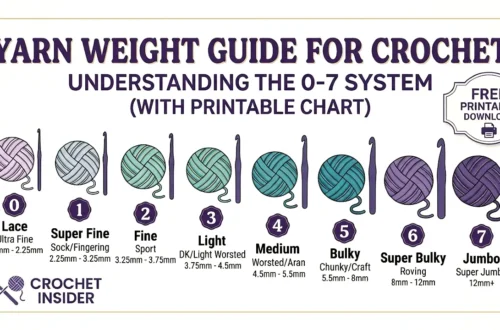
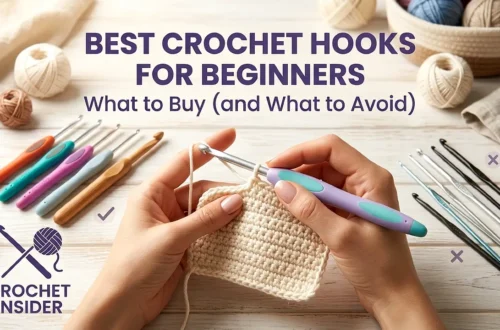
These come in different sizes, usually ranging from 2.25 mm (B) to 15 mm (P). For beginners, I recommend starting with a size H (5 mm) or I (5.5 mm). They work great with medium-weight yarn and are easy to handle.
Look for an ergonomic hook with a soft grip if you want to avoid hand fatigue.
2. Yarn
Start with a medium-weight (category 4) acrylic yarn in a light color. It’s easier to see your stitches and won’t split easily. Brands like Red Heart, Caron, or Lion Brand have great beginner-friendly options.
Avoid dark colors or fuzzy/textured yarns until you’re more comfortable.
3. Scissors
Any pair of small, sharp scissors will do for snipping yarn ends.
4. Yarn Needle (Tapestry Needle)
This is a large needle with a blunt end and a big eye. You’ll use it to weave in yarn tails at the end of your project.
5. Stitch Markers (Optional)
Useful to mark the beginning of a round or certain stitch positions. Paper clips or bobby pins work too!
Getting Started: Holding the Hook and Yarn
This part takes a bit of practice—don’t worry if it feels weird at first.
Holding the Hook:
There are two main grips:
- Pencil grip: hold it like a pencil
- Knife grip: hold it like a knife
Try both and stick with what feels most natural for your hands.
Holding the Yarn:
This helps control the tension (how tight or loose your stitches are). You’ll usually loop the yarn around a few fingers of your non-dominant hand. Again, comfort is key.
Don’t stress if your tension is inconsistent in the beginning—it will even out with time and practice.
Basic Crochet Stitches You Need to Know
We’ll go over the four essential stitches every beginner should learn.
1. Slip Knot (How to Start Any Project)
This is how you attach the yarn to your hook.
Steps:
- Make a loop with the yarn, crossing the working yarn (the part from the ball) over the tail.
- Insert your fingers through the loop, grab the working yarn, and pull it through.
- Tighten it onto your hook—not too tight!
2. Chain Stitch (ch)
This is your foundation—like the base row of your project.
Steps:
- Yarn over (wrap the yarn over the hook from back to front).
- Pull the hook through the loop.
- Repeat!
Practice chaining until it feels smooth and even.
3. Single Crochet (sc)
This is the simplest actual stitch.
Steps:
- Insert the hook into the chain.
- Yarn over and pull up a loop (you’ll have two loops on the hook).
- Yarn over again and pull through both loops.
Done! One single crochet.
4. Double Crochet (dc)
A taller stitch that works up quickly.
Steps:
- Yarn over.
- Insert the hook into the stitch.
- Yarn over and pull up a loop (3 loops on hook).
- Yarn over and pull through 2 loops.
- Yarn over again and pull through the remaining 2 loops.
Practice Project: Crochet a Simple Dishcloth
Let’s put all that into action! This beginner-friendly dishcloth will help you build muscle memory and confidence.
You’ll need:
- Medium weight yarn
- Size H or I crochet hook
Instructions:
- Make a slip knot and chain 26.
- In the second chain from the hook, make a single crochet.
- Continue single crocheting across the row (25 stitches).
- Chain 1 and turn your work.
- Repeat rows of single crochet until the cloth is square.
- Fasten off and weave in ends with the yarn needle.
You just made your first real project!
How to Read Crochet Patterns (Without Getting Overwhelmed)
Crochet patterns can look like secret codes at first. But once you get used to the abbreviations, it’s like reading a recipe—and trust me, it becomes second nature with practice.
Common Abbreviations:
- ch = chain
- sc = single crochet
- dc = double crochet
- sl st = slip stitch
- st(s) = stitch(es)
- sk = skip
- rep = repeat
- tog = together (used in decreases)
Example:
“Ch 26, sc in 2nd ch from hook, sc across, ch 1, turn.”
Translation: Make 26 chain stitches. In the second chain from the hook, do a single crochet. Continue single crocheting across the row. Chain 1 and turn your work to start the next row.
Don’t worry—most patterns come with a key to explain the abbreviations. You’ve got this!
How to Turn Your Work
Turning is simply flipping your work to the other side when you finish a row. It’s usually done like this:
- When you reach the end of a row, chain 1 (or more, depending on the stitch you’re using).
- Then turn your work clockwise like turning a page in a book.
- Continue stitching into the first or second stitch, depending on the pattern.
Turning chains can count as a stitch in some patterns—always check the instructions.
Tips to Keep Your Stitches Even
In the beginning, your stitches might look like a rollercoaster—some tight, some loose. That’s totally normal!
Here are a few tips to smooth things out:
- Relax your hands – tension comes with time.
- Practice with bigger hooks – they’re easier to manage.
- Count your stitches every row – yes, really! It helps you keep the edges straight.
- Use stitch markers – mark the first and last stitch of each row.
Eventually, your hands will “remember” the rhythm, and it will feel completely natural.
How to Finish a Crochet Project Properly
When you’re done with your piece:
- Cut the yarn, leaving a 5–6 inch tail.
- Yarn over and pull the tail through the last loop to fasten off.
- Use your yarn needle to weave the tail through a few stitches—back and forth—to hide it.
Weaving in ends neatly gives your work a polished, professional look.
Common Beginner Mistakes (and How to Avoid Them)
Don’t beat yourself up if things go wrong—it happens to all of us. Here are some things to look out for:
- Uneven edges: Usually caused by accidentally skipping or adding stitches. Counting helps!
- Twisted chains: Always check that your foundation chain isn’t twisted before joining in the round.
- Tension issues: Practice is the only cure. Try not to grip your yarn too tightly.
- Skipping the turning chain: This is a classic! Don’t forget it when starting a new row.
Crochet is forgiving. If you make a mistake, you can easily pull out stitches and redo them.
Where to Go From Here: Your Beginner Journey
So now you know how to:
✅ Choose your tools
✅ Make the basic stitches
✅ Read patterns
✅ Finish a project
✅ Troubleshoot common issues
Where do you go next?
Try out these beginner-friendly projects:
- Dishcloths (as you already did!)
- Headbands
- Scarves
- Coasters
- Granny squares (they’re fun and SO versatile)
And once you’ve practiced those? Step up to hats, bags, plushies, even garments!
Crochet Lingo You Might Hear Online
The crochet community is huge—and wonderfully supportive. Here are a few terms you might run into:
- Frogging: Ripping out stitches (because you “rip-it, rip-it”)
- WIP: Work in progress
- FO: Finished object
- Yarn chicken: When you’re not sure if you have enough yarn to finish a project
- Stash: Your yarn collection (yes, it grows fast!)
Follow hashtags like #crochetlove or #beginnercrochet on Instagram and TikTok to get inspired and connect with others.
Final Words from a Fellow Crochet Lover
If you’ve made it this far—congratulations! You’re officially a crocheter.
Crochet is more than just a hobby. It’s creative, calming, and even meditative. It’s a skill you can take with you for life—something to do on quiet evenings, long road trips, or cozy Sundays at home.
My advice? Take it slow. Don’t compare your stitches to others’. Celebrate your wonky first scarf. Share your joy. And most importantly, have fun!
You’ve got this.

Muy organizado y fácil de entender tus instrucciones, yo conozco un poco de tejido a crochet , he realizado pequeños proyectos, pero no me canso de ver todo lo relacionando con el crochet y ver si en un futuro podría tener una cuenta de en las redes sociales y transmitir mis conocimientos. Estoy comenzando a ver tu pagina web porque si he adquirido tu Diccionario crochet every way stich dictionary y me ha gustado mucho 🙂