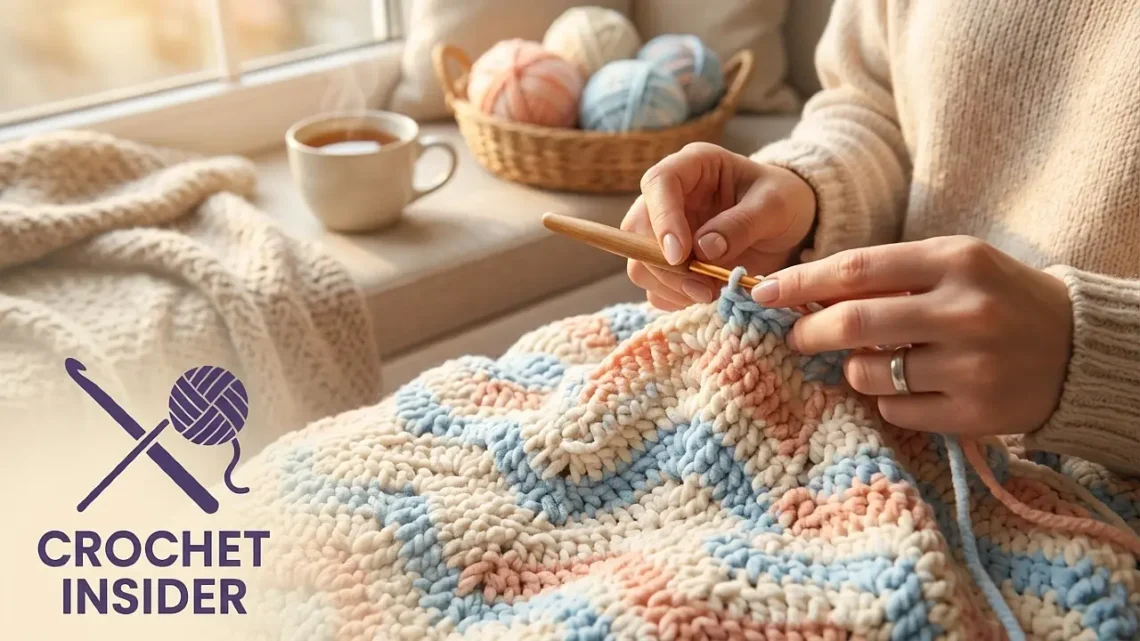
I remember standing in the yarn aisle, holding a skein of pale yellow cotton, absolutely terrified. I was about to attempt my first baby blanket for a friend’s baby shower. I had only made dishcloths before. But I bought the yarn, went home, and followed a pattern. Two weeks later, I had a blanket. It wasn’t perfect – the edges were a little wavy, and the stripes didn’t line up – but when I gave it to her, she cried. That blanket is now 10 years old and still being used. A baby blanket is more than a project; it’s a hug you crochet. In this step‑by‑step guide, I’ll walk you through every single phase, from picking the right yarn to weaving in the final tail. No experience needed. Let’s make a baby blanket together.
Step 1: Choose the right yarn and hook
Not all yarns are good for baby blankets. You need something soft, washable, and durable. Here’s what I recommend:
- Soft acrylic (best for beginners): Bernat Softee Baby, Lion Brand Babysoft, Caron Simply Soft. Machine washable, hypoallergenic, and affordable.
- Cotton (for summer blankets): Lion Brand 24/7 Cotton, Cascade Ultra Pima. Breathable, but can be heavier.
- Avoid: Wool (can be itchy, not always machine washable), eyelash/fuzzy yarn (impossible to see stitches), dark colours (hard to see where you’re working).
Hook size: Use the size recommended on the yarn label, or go up 0.5mm for a softer, drapier blanket. For worsted weight, a 5.5mm (I‑9) is perfect.
How much yarn? A baby blanket (30″ x 36″) takes about 500‑700 yards. Buy one extra skein – you can always use it for a matching hat or booties.
My go‑to beginner baby blanket yarn
Bernat Softee Baby in a light pastel. It’s soft, it’s washable, and it comes in a “pound” skein that’s enough for a whole blanket. I’ve made at least a dozen blankets with it.
Step 2: Choose your blanket size and pattern
For your first baby blanket, keep it simple. A rectangle in double crochet is classic, fast, and beautiful. Use this pattern:
Simple Double Crochet Baby Blanket (approx 30″ x 36″)
Absolute beginnerAlternative sizes: For a lovey (small security blanket), make it 14″ x 14″. For a crib blanket, make it 36″ x 45″. Just add or subtract chains and rows.
Step 3: Make a gauge swatch (yes, do it)
A gauge swatch is a small test square. For a baby blanket, gauge isn’t critical – if it’s a few inches bigger or smaller, it’s still a blanket – but making a swatch will help you learn your tension and practice the stitch. Here’s how:
- Ch 16. Dc in 4th ch and each ch across (13 dc + turning chain). Repeat for 6 rows.
- Measure the middle 4″ of your swatch. Count how many dc you have. If you have 13‑14 dc in 4″, your gauge is perfect. If you have more, your stitches are small – go up a hook size. If you have fewer, your stitches are large – go down a hook size.
- Adjust your hook and try again. It takes 10 minutes and saves you from a blanket that’s the wrong size.
For the pattern above, the exact stitch count doesn’t matter as long as you stay consistent. But practising a swatch is good for your hands.
Step 4: Crochet the foundation chain
Now let’s start the actual blanket. You’ll need a slip knot and your hook.
Step 5: Work the first row
The first row of double crochet is the most important. Take it slow.
Step 6: Repeat rows (the meditative part)
Now the rhythm begins. Each row is exactly the same:
- Skip the first stitch (because the ch‑3 already counts as the first dc).
- Dc in each of the remaining stitches across.
- When you reach the end, your last dc should go into the top of the turning chain from the previous row.
- Chain 3, turn.
That’s it. Repeat until your blanket measures about 36″ (or your desired length). Place a stitch marker every 10 rows to keep track. This is the perfect project for watching TV or listening to audiobooks – your hands will learn the rhythm after the first 10 rows.
How to know when you’re done: Lay the blanket flat and measure from the foundation chain to the last row. Don’t stretch it – let it lie naturally. If you’re making it for a gift, 36″ is a nice size for wrapping a baby. For a toddler, you can go to 40‑45″.
Step 7: Add a simple border
A border finishes the edges and hides any minor unevenness. This single crochet border works for any blanket.
Step 8: Weave in ends
If you changed colours, you’ll have tails. If you used one colour, you’ll have only two tails (start and finish). Weave them in with a tapestry needle:
- Thread the tail onto the needle.
- Weave the needle through the backs of several stitches in one direction, then reverse direction and go back through a few more.
- Pull gently and snip the yarn close to the fabric.
- Pro tip: Weave in ends as you go – if you wait until the end, you’ll have 50 ends and no motivation.
Step 9: Wash and block your blanket
Washing and blocking (shaping) your blanket will make it look professional and feel softer.
- For acrylic: Machine wash cold, gentle cycle. Tumble dry low. Acrylic doesn’t need blocking – the machine will relax the stitches.
- For cotton: Machine wash warm, tumble dry low. Cotton shrinks slightly – that’s fine. To block, lay the blanket flat on a towel after washing and gently stretch it into a perfect rectangle. Pin the edges if needed.
Blocking is especially helpful if your edges are wavy or your stitches are uneven.
Step 10: Gift your blanket
Now for the best part. Fold your blanket neatly, tie it with a ribbon, and add a handwritten tag: “Handmade with love for Baby.” Include care instructions: “Machine wash cold, gentle cycle. Tumble dry low.” If you made a matching hat or booties, tuck them in too.
When you give the blanket, watch their face. They will cry. I promise. And you’ll know that every stitch was worth it.
Troubleshooting: When things go wrong
You did it
You just made a baby blanket. That’s a big deal. Whether it’s for your own baby, a niece or nephew, or a friend’s shower, this blanket will be used and loved for years. The edges might be a little wobbly, the stripes might not line up perfectly – but that doesn’t matter. What matters is that you made something warm and beautiful, stitch by stitch. Now go wrap a baby in it.