The Great Yarn Guess: How to (Accurately) Estimate Yardage for Any Crochet Project
There are few feelings worse than running out of yarn. You’re three-quarters through a beautiful blanket, in the groove, and then… the skein ends. You rush back to the store, only to find your dye lot is sold out forever. The leftover balls from a previous project sit there, mocking you—too much for some things, never enough for others. I’ve suffered this heartbreak more than once, leading to panic-buying, awkward color transitions, or abandoned projects.
Estimating yarn isn’t magic or pure luck; it’s a combination of math, experience, and smart planning. While a pattern will tell you how much of its specified yarn you need, life isn’t that simple. What if you want to use a different yarn? Change the size? Design your own blanket? This guide will give you the tools. We’ll cover how to use a pattern’s information, how to calculate yardage from scratch using swatches, and my favorite rules of thumb for common projects. You’ll learn about “yardage density,” how fiber content affects usage, and how to safely use up precious stash yarn. Let’s banish the fear of the bottom of the ball and buy (or use) yarn with confidence.
Part 1: When You Have a Pattern (The Easy Route)
The pattern is your first and best resource. But you must read it correctly.
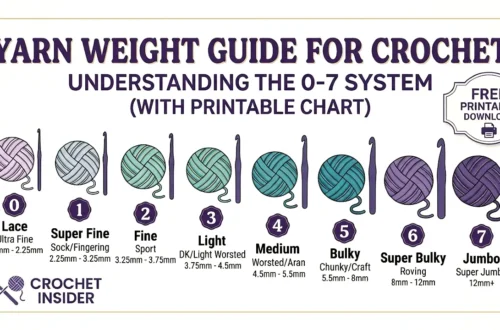
- Find the “Yarn” Section: It will say something like: “Worsted weight yarn (Category 4), 1200 yards.”
- CRITICAL: Yardage vs. Skeins: The important number is total yardage (or meters). The “skeins” suggestion (e.g., “6 skeins”) is ONLY accurate if you use the exact yarn specified.
- Example: Pattern calls for “Yarn A: 6 skeins (200 yds/skein) = 1200 yds total.”
- You choose “Yarn B: 180 yds/skein.”
- You need: 1200 total yards / 180 yards per skein = 6.67 skeins. You must buy 7 skeins.
- Account for Gauge Differences: If your gauge swatch is looser (fewer stitches per inch) than the pattern’s, you will use more yarn. If it’s tighter, you’ll use less. For a significant gauge mismatch, add or subtract 10-20% from the total yardage estimate.
- Buy Extra for Safety (The 10% Rule): Especially for large projects like blankets or garments, I always buy an extra 10% of the total yardage. This covers gauge variations, making a longer sleeve, or fixing mistakes. It’s better to have a partial ball left than to run out.
Part 2: The Swatch Method – Estimating from Scratch
This is the gold standard for designing your own project or using a mystery stash yarn. It requires a little work but is incredibly accurate.

- Make a Significant Swatch: Using your chosen yarn and hook, crochet a swatch at least 6” x 6” in the stitch pattern you plan to use.
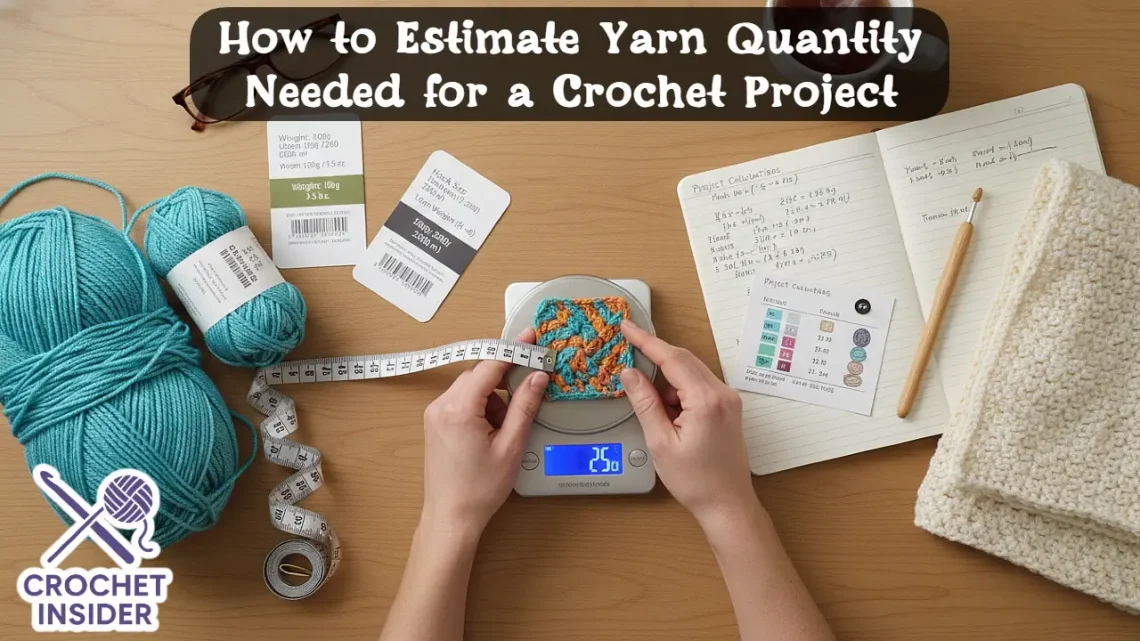
- Weigh the Swatch: Use a digital kitchen scale (a crocheter’s best friend!) to weigh the swatch in grams. Note the weight (e.g., 15g).
- Calculate the Swatch Area: Measure the swatch’s width and height in inches. Multiply to get area in square inches (e.g., 6” x 6” = 36 sq in).
- Calculate Your Project’s Area: Estimate the total surface area of your finished project. For a rectangle (blanket, scarf): Length x Width. For a simple garment, you might estimate front + back as two rectangles. Don’t overcomplicate; a rough estimate is fine. (e.g., Blanket: 50” x 60” = 3000 sq in).
- Do the Math – The Magic Formula:
(Project Area / Swatch Area) x Swatch Weight = Total Project Weight
Example: (3000 sq in / 36 sq in) = 83.33. 83.33 x 15g = 1250 grams total project weight. - Convert Weight to Yardage: Look at your yarn label. It says “50g / 100yds.” So, 1 gram = 2 yards. Your project weight (1250g) x 2 yards per gram = 2500 yards needed.
This method is powerful because it accounts for your exact tension, stitch pattern, and hook size.
Part 3: Rules of Thumb & Quick Estimates
For quick planning or stash-diving, these averages can help. (Based on worsted weight yarn ~200 yds/100g).
- Adult Beanie/Hat: 150 – 250 yards
- Adult Scarf (6” x 60”): 400 – 600 yards
- Pair of Adult Mittens: 200 – 300 yards
- Baby Blanket (30” x 30”): 800 – 1200 yards
- Adult Lap Afghan (40” x 50”): 1500 – 2000 yards
- Adult Sweater (Pullover): 1200 – 1800 yards (depends heavily on size, stitch, sleeve length)
- Granny Square (6” motif): 25 – 40 yards per square
Remember: Lacy, open stitches use less yarn than dense stitches like single crochet. Bulky yarn projects use more yardage by weight but fewer yards by length.
Part 4: Special Scenarios & Pro Tips
Using Stash Yarn (The “Will I Have Enough?” Game):
- Weigh Your Stash Ball. If it’s a partial, weigh it. If the label is gone, weigh it and guess the fiber/weight.
- Estimate Yardage Remaining. If a new 100g ball has 200yds, and your partial weighs 40g, you have roughly (40/100)*200 = 80 yards left.
- Compare to Your Project Estimate. If you need 250 yards for a hat and you have 80, you need to combine with another yarn or choose a smaller project.
Planning a Scrap Yarn Blanket:
This is where weight is king. Decide on a finished blanket size and weight. As you add squares or rows, weigh the blanket. When you’re halfway to your target weight, you’re roughly halfway done.
How Fiber Affects Yardage:
Yarn is sold by weight, but you care about length. A fluffy, bulky wool (low yardage per 100g) will run out faster than a dense, smooth cotton (high yardage per 100g) of the same weight category. Always check the yardage on the label, not just the weight.
Part 5: My Foolproof Project Planning Routine
- Choose Pattern or Design.
- Swatch & Block. Get gauge and use the swatch method to estimate yardage if not following a pattern exactly.
- Calculate Total Yardage Needed. Add 10% buffer.
- Buy All Yarn at Once from the Same Dye Lot. This is non-negotiable for large, solid-color projects.
- Keep All Balls’ Labels in a ziplock bag with the project. If you need more, you have all the info.
- Weigh Yarn as You Go for large projects. If you’ve used half your yarn by weight, you should be roughly halfway through the project. It’s a great progress check!
Taking the time to estimate yardage properly is an act of kindness to your future self. It saves money, prevents stress, and ensures your creative flow isn’t interrupted. With these tools in hand, you can approach any project—patterned or designed from your heart—with the confidence that you have the resources to see it through to a beautiful, complete end.
Plan Your Next Project Perfectly:
- Step 1: How to Read a Yarn Label for Yardage & Weight – Get the crucial numbers.
- Step 2: The Importance of a Accurate Gauge Swatch – The foundation of all estimates.
- Creative Option: How to Combine Yarns to Use Stash – Make the most of what you have.
- Simple Start: A First Project with Clear Yardage Guidance – Practice on a small scale.