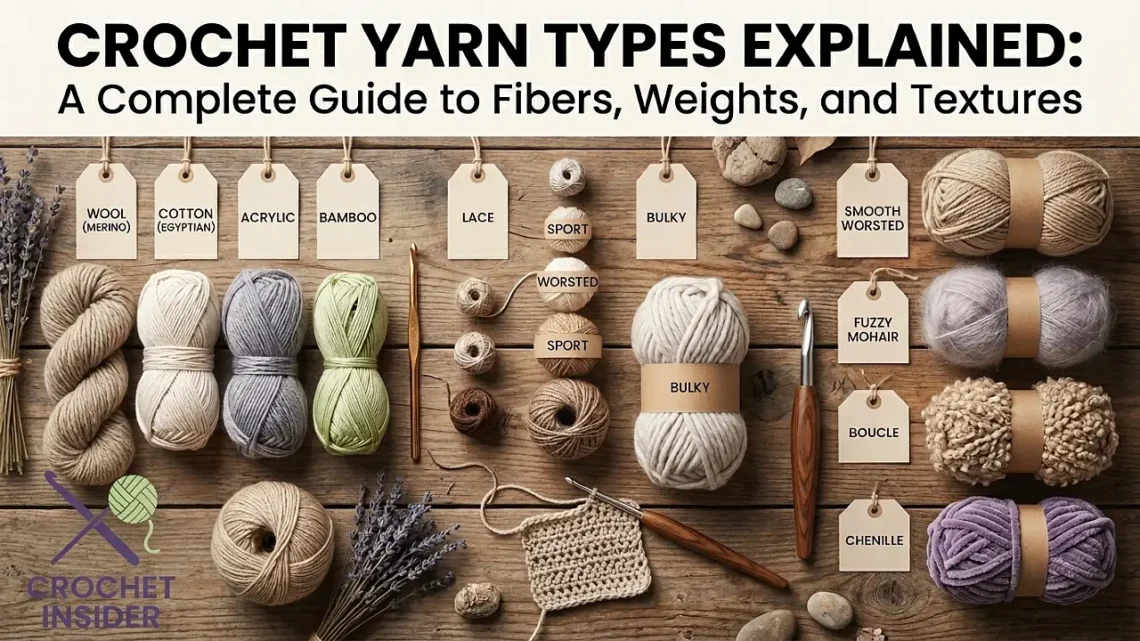
When I first started crocheting, I thought all yarn was the same. I grabbed a skein of cheap scratchy acrylic and wondered why my dishcloth felt like sandpaper. Then I discovered cotton. Then wool. Then bamboo. Suddenly, the world opened up. Choosing the right yarn is just as important as choosing the right pattern – the fibre affects drape, warmth, durability, and how your finished project feels. In this guide, I’ll explain every major yarn type: acrylic, cotton, wool, bamboo, linen, hemp, alpaca, silk, chenille, and blends. I’ll tell you what each is best for, how to care for it, and which are beginner‑friendly. Bookmark this page – you’ll come back to it every time you shop for yarn.
Yarn basics: fibre, weight, twist, ply
Before we dive into specific fibres, let’s cover a few key terms:
- Fibre: The material the yarn is made from (acrylic, cotton, wool, etc.).
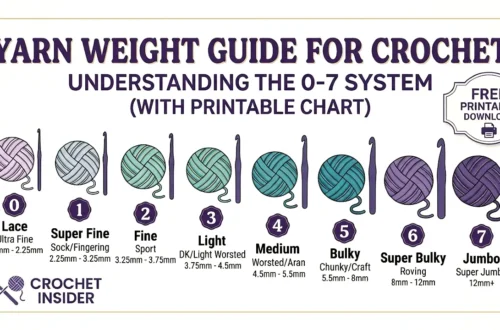
- Weight: The thickness of the yarn. For beginners, worsted (#4) is best.
- Twist: How tightly the fibres are spun. Tighter twist = more durable, better stitch definition. Looser twist = softer, more prone to splitting.
- Ply: The number of strands twisted together (e.g., 2‑ply, 4‑ply). More plies = rounder, more durable yarn.
Most beginners don’t need to worry about twist and ply – just focus on fibre and weight.
Acrylic – the beginner’s best friend
Acrylic (100% synthetic)
Pros: Cheap, soft, machine washable, huge colour selection, easy to frog, doesn’t felt.
Cons: Can be less breathable, may pill over time, not heat‑resistant (can melt), not absorbent.
Best for: Blankets, hats, scarves, amigurumi, practice projects – anything that will be washed often.
Care: Machine wash cold, tumble dry low.
Beginner? ★★★★★ (best for beginners)
Recommended acrylic yarns →
Cotton – breathable, absorbent, durable
Cotton (100% natural plant fibre)
Pros: Breathable, absorbent, holds shape well, washable, gets softer with use, excellent stitch definition.
Cons: Can be stiff, lacks stretch, can be heavy, may shrink.
Best for: Dishcloths, washcloths, market bags, summer tops, amigurumi (holds shape), baby items.
Care: Machine wash warm, lay flat or tumble dry low. Expect some shrinkage.
Beginner? ★★★★☆ (great for dishcloths, but practice tension first)
Wool – warm, elastic, resilient
Wool (from sheep – includes Merino, Shetland, etc.)
Pros: Very warm, naturally elastic, breathable, wrinkle‑resistant, great stitch definition.
Cons: Can be itchy (depending on breed), expensive, requires careful washing (hand wash, lay flat), can felt.
Best for: Winter sweaters, hats, mittens, socks, blankets.
Care: Hand wash cold with wool wash, lay flat to dry. Never machine wash or dry.
Beginner? ★★★☆☆ (skip for first projects – save for later)
Bamboo – silky, drapey, eco‑friendly
Bamboo (semi‑synthetic, from bamboo pulp)
Pros: Extremely soft, silky, beautiful drape, breathable, slightly shiny, eco‑friendly.
Cons: Can be splitty, lacks memory (stretches out of shape), heavy, expensive.
Best for: Shawls, lightweight garments, summer tops, baby blankets, scarves.
Care: Hand wash or machine wash delicate, lay flat to dry.
Beginner? ★★★☆☆ (soft but can be slippery to work with)
Linen – strong, cool, gets softer with age
Linen (from flax plant)
Pros: Very strong, gets softer with every wash, cool and breathable, excellent drape.
Cons: Stiff initially, expensive, can be splitty, lacks elasticity.
Best for: Summer garments, shawls, market bags, home decor.
Care: Hand wash or machine wash delicate, lay flat to dry.
Beginner? ★★☆☆☆ (stiffness can be challenging – not for first project)
Alpaca – luxurious, warm, hypoallergenic
Alpaca (from alpacas)
Pros: Very soft, warmer than wool, hypoallergenic (no lanolin), silky drape.
Cons: Expensive, lacks elasticity (can stretch), can shed, not as durable as wool.
Best for: Luxurious scarves, shawls, hats, cowls.
Care: Hand wash cold, lay flat to dry.
Beginner? ★★☆☆☆ (expensive – practice with acrylic first)
Silk – lustrous, strong, expensive
Silk (from silkworms)
Pros: Beautiful sheen, very strong, smooth, good drape, temperature‑regulating.
Cons: Very expensive, can be slippery to work with, may show every stitch imperfection.
Best for: Heirloom projects, lace shawls, special occasion garments.
Care: Hand wash cold, lay flat to dry.
Beginner? ★☆☆☆☆ (save for advanced projects – too expensive for practice)
Chenille / velvet – soft, fuzzy, tricky
Chenille / Velvet (usually polyester or acrylic)
Pros: Extremely soft, plush, beautiful texture, great for blankets and plush toys.
Cons: Very difficult to frog (unravel), stitches are hard to see, can be slippery, sheds.
Best for: Plush blankets, amigurumi (once you’re experienced), pillows.
Care: Machine wash cold, gentle cycle, tumble dry low.
Beginner? ★☆☆☆☆ (avoid for first projects – you won’t see your stitches)
Blends – best of both worlds
Blends (e.g., acrylic/wool, cotton/bamboo)
Pros: Combine the best properties of each fibre (e.g., acrylic adds durability to wool, wool adds elasticity to cotton). Often more affordable than pure fibres.
Cons: Can be inconsistent; care instructions may vary.
Best for: Almost anything – depends on the blend.
Common blends:
– Acrylic/wool: warm, durable, machine washable (great for beginner garments).
– Cotton/bamboo: soft, drapey, breathable (great for summer tops).
– Nylon/wool (sock yarn): durable, elastic (best for socks).
Beginner? ★★★★☆ (depends on blend – acrylic/wool is great)
Quick reference: which yarn for which project?
| Project type | Best yarn | Why |
|---|---|---|
| Dishcloths / washcloths | Cotton | Absorbent, scrubby, washable |
| Baby blankets | Soft acrylic or cotton | Machine washable, hypoallergenic |
| Winter hats / scarves | Acrylic, wool, or acrylic/wool blend | Warm, durable |
| Summer tops | Cotton, bamboo, linen, cotton/bamboo blend | Breathable, cool |
| Amigurumi | Cotton or acrylic | Cotton holds shape; acrylic is cheap and soft |
| Garments (sweaters, cardigans) | Acrylic/wool blend, soft acrylic, or bamboo | Drape, warmth, washability |
| Shawls | Bamboo, alpaca, silk, merino wool | Soft, drapey, luxurious |
| Socks | Wool/nylon blend | Durable, elastic, warm |
| Market bags | Cotton | Strong, holds shape, washable |
| Home decor (pillows, baskets) | Cotton or acrylic | Cotton is stiff; acrylic is soft |
How to read a yarn label
Every skein has a label. Here’s what you need to know:
- Yarn weight symbol: The skein with a number 0‑7. For beginners, look for #4 (worsted).
- Fibre content: e.g., “100% acrylic”, “85% cotton, 15% polyester”.
- Yardage / metres: How many yards in the skein. Use this to calculate how many skeins you need.
- Recommended hook size: A range (e.g., 5.0‑6.0mm). Start with the smaller size for denser fabric.
- Gauge: e.g., “14 sc x 16 rows = 4″”. Essential for garments, optional for blankets.
- Care instructions: Symbols or text (machine wash, hand wash, dry flat). Always check before buying – some yarns are hand wash only.
- Dye lot: A number or letter. If you need multiple skeins for a big project, buy the same dye lot so colours match.
My personal yarn recommendations for beginners
Here’s what I’d buy if I were starting over today:
- For practice & everyday projects: Lion Brand Basic Stitch Anti‑Pilling or Caron Simply Soft (acrylic).
- For dishcloths & kitchen: Lily Sugar’n Cream or Lion Brand 24/7 Cotton (cotton).
- For a first garment: Lion Brand Heartland or Berroco Comfort (acrylic, soft, good drape).
- For a baby gift: Bernat Softee Baby (soft acrylic) or Knit Picks Comfy (cotton blend).
Your yarn journey starts here
You don’t need to memorise every fibre. Start with acrylic – it’s cheap, forgiving, and you can learn without fear. After a few projects, try cotton for dishcloths. Then explore wool and bamboo for garments. Each new fibre will teach you something new about how crochet works. Bookmark this guide – you’ll come back to it whenever you’re standing in the yarn aisle, wondering what to buy.