I’ve been crocheting for over a decade, and I still remember the confusion of picking my first skein. “Worsted? DK? Acrylic? Cotton? What does ‘ply’ mean?” The yarn aisle can feel like a foreign country. This guide is the simple, no‑jargon answer to “what yarn should I use as a beginner?” I’ll give you specific recommendations, a printable cheat sheet, and tell you exactly what to look for on the label. No fluff, just what you need to know to buy your first yarn and start crocheting.
The short answer (what to buy today)
If you’re standing in a craft store right now and need one skein to start learning, buy this:
Lion Brand Basic Stitch Anti‑Pilling (or Caron Simply Soft or Red Heart Super Saver)
Weight: Worsted (#4)
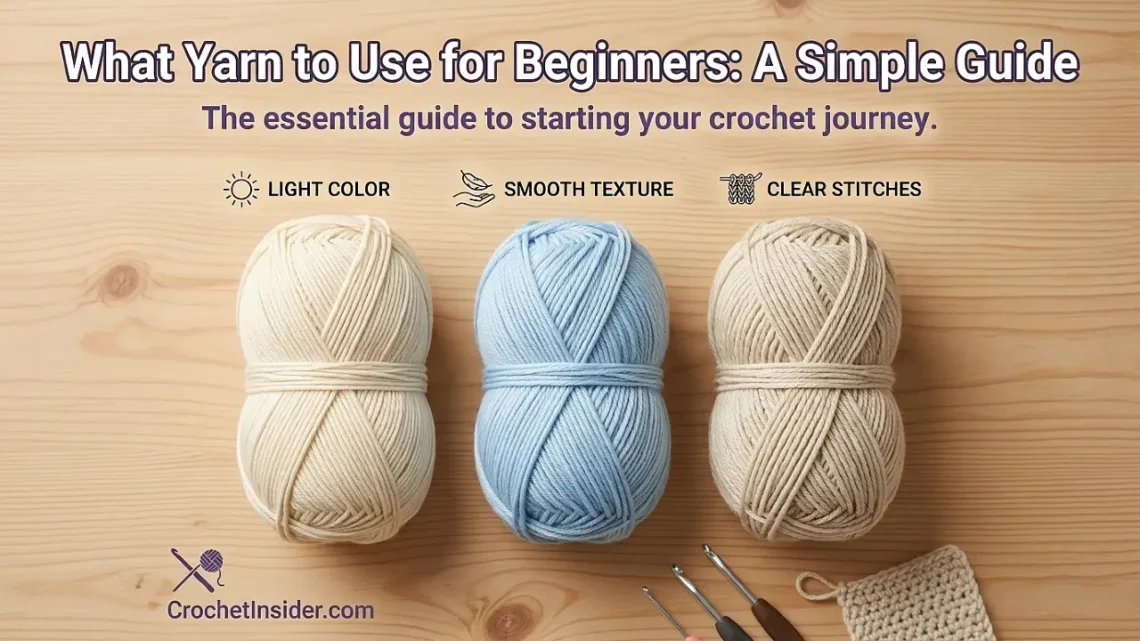
Colour: Light, solid – think cream, pale grey, soft yellow, or mint green.
Fibre: 100% acrylic
Hook to go with it: 5.5mm (I‑9)
That’s it. That yarn will work for 90% of beginner patterns, including dishcloths, scarves, hats, and blankets. Don’t overthink it.
Yarn weight chart – the only number you need
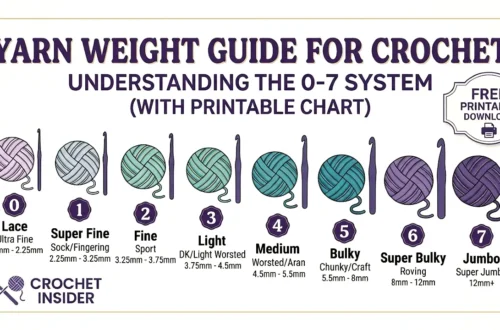
Yarn comes in thicknesses called “weights,” numbered 0 (lace) to 7 (jumbo). As a beginner, you want #4 – worsted weight. It’s the standard. It’s what most patterns are written for. Here’s a quick chart:
| Number | Name | Good for beginners? |
|---|---|---|
| 0 | Lace | No – too thin, hard to see |
| 1 | Fingering / super fine | No – too thin |
| 2 | Fine / sport | Maybe – a bit thin but workable |
| 3 | Light / DK | Yes – good for garments |
| 4 | Medium / worsted | YES – best for beginners |
| 5 | Bulky | Yes – works up fast, good for blankets |
| 6 | Super bulky | Yes – very fast, good for chunky blankets |
| 7 | Jumbo | No – too thick for standard hooks |
Remember: Look for the number 4 on the label. That’s your beginner friend.
Fiber types: acrylic vs cotton vs wool (and when to use each)
Acrylic – best for beginners (90% of your first projects)
Pros: Cheap, soft, machine washable, easy to frog (unravel), huge colour selection.
Cons: Can be less breathable, may pill over time.
Use for: Blankets, hats, scarves, amigurumi, practice swatches.
Top beginner picks: Lion Brand Basic Stitch, Caron Simply Soft, Red Heart Super Saver.
Cotton – best for dishcloths and summer items
Pros: Breathable, absorbent, holds shape, washable.
Cons: Can be stiff, less stretchy, heavier.
Use for: Dishcloths, market bags, summer tops, amigurumi (holds shape well).
Top beginner picks: Lion Brand 24/7 Cotton, Lily Sugar’n Cream.
Wool – skip as a beginner (save for later)
Pros: Warm, elastic, breathable.
Cons: Expensive, can be itchy, needs special washing (hand wash, lay flat).
Use for: Winter sweaters, socks – after you’ve mastered basic stitches.
Beginner recommendation: Wait until you’re comfortable with acrylic first.
My rule: Start with acrylic. It’s cheap and forgiving. When you’re confident, try cotton for kitchen projects. Wool can wait.
The best colours for beginners (and which to avoid)
The right colour makes learning 10x easier. Here’s what works:
- Light, solid colours: Cream, pale grey, soft pink, mint green, light yellow, pale blue.
- Why? You can clearly see the V shapes of your stitches. You’ll know exactly where to insert your hook.
Avoid at all costs as a beginner:
- Black, navy, dark brown, deep purple. You can’t see your stitches. Seriously, don’t do this to yourself.
- Variegated or self‑striping yarns. They’re beautiful, but the colour changes distract your eye from stitch structure.
- Neon or very bright colours. They can be harsh on the eyes and make stitch definition harder.
Real talk from my first project
I bought a skein of black yarn for my first scarf. I spent more time trying to find my stitches than actually crocheting. I almost quit. Don’t be me. Buy cream or pale grey.
Texture matters: smooth vs fuzzy (avoid fuzzy at all costs)
When you’re learning, you need to see each stitch clearly. That means smooth, plied yarn – the kind that looks like a twisted rope.
Good textures for beginners:
- Smooth acrylic (Red Heart Super Saver, Caron Simply Soft)
- Smooth cotton (Lily Sugar’n Cream, Lion Brand 24/7 Cotton)
Bad textures for beginners (save for later):
- Chenille / velvet: The fluffy fibres hide your stitches and are impossible to frog.
- Eyelash / bouclé / novelty yarns: You literally cannot see where to insert your hook.
- Roving / unspun yarn: Falls apart easily; not for beginners.
Stick with smooth yarn until you can crochet without looking at your hands. Then experiment with fancy textures.
How to read a yarn label in 30 seconds
Every skein has a label. Here’s what matters for a beginner:
- The weight symbol: A small picture of a skein with a number (0‑7). Look for 4 (worsted).
- Recommended hook size: Usually says “US H‑8 (5.0mm)” or similar. For worsted weight, 5.0‑5.5mm is perfect.
- Yardage / metres: How many yards are in the skein. A small dishcloth needs about 50 yards; a scarf needs 200‑300; a blanket needs 600‑1500.
- Dye lot: A number or letter. If you need multiple skeins for a big project, buy the same dye lot so colours match.
- Care instructions: Look for “machine wash” and “tumble dry low” – you want easy care.
Ignore for now: Gauge (unless you’re making a garment). You can learn gauge later.
Printable beginner yarn cheat sheet
Here’s a simple table you can screenshot or print. Keep it in your wallet for yarn shopping.
| Look for | Avoid |
|---|---|
| Weight #4 (worsted) | Lace (#0), fingering (#1), jumbo (#7) |
| Light, solid colours (cream, grey, pale blue) | Black, navy, dark colours; variegated |
| Smooth texture (acrylic or cotton) | Chenille, velvet, eyelash, bouclé |
| Acrylic (for most projects) | Wool (for your first project) |
| Machine washable | Hand wash only |
Your shopping list for a first project:
- 1 skein of worsted (#4) acrylic in a light solid colour
- 1 crochet hook size 5.5mm (I‑9)
- 1 tapestry needle (for weaving ends)
- Scissors (any kind)
Total cost: around $10‑15. You’ll be able to make a dishcloth, then a scarf, then a hat – all from that one skein.
Quick answers to common beginner questions
“Can I use yarn from the dollar store?”
You can, but it’s usually scratchy and hard to work with. Spend an extra $2‑3 on a brand like Red Heart or Lion Brand – your hands will thank you.
“How many skeins do I need for a blanket?”
For a baby blanket, 2‑3 skeins (600‑700 yards). For a lap blanket, 3‑4 (800‑1000 yards). For a large throw, 5‑6 (1200‑1500 yards).
“What’s the difference between worsted and DK?”
Worsted (#4) is thicker. DK (#3) is thinner. Stick with worsted for now – it’s more common and easier to see.
“Can I substitute yarn if the pattern calls for something else?”
Yes, stick to the same weight (#4 worsted) and similar fibre (acrylic). Your project will turn out a bit different but still beautiful.
You’re ready to buy yarn
Now you know exactly what to look for. Walk into that craft store with confidence. Find the #4 worsted section. Pick a light solid colour. Feel the skein – if it’s soft, it’s good. Buy one skein and a 5.5mm hook. Go home, watch our beginner tutorial, and make your first dishcloth. You’ve got this.
You might also enjoy


Related Posts
Yarn Weight Guide for Crochet: Understanding the 0‑7 System (With Printable Chart)
Best Crochet Hooks for Beginners: What to Buy (and What to Avoid)