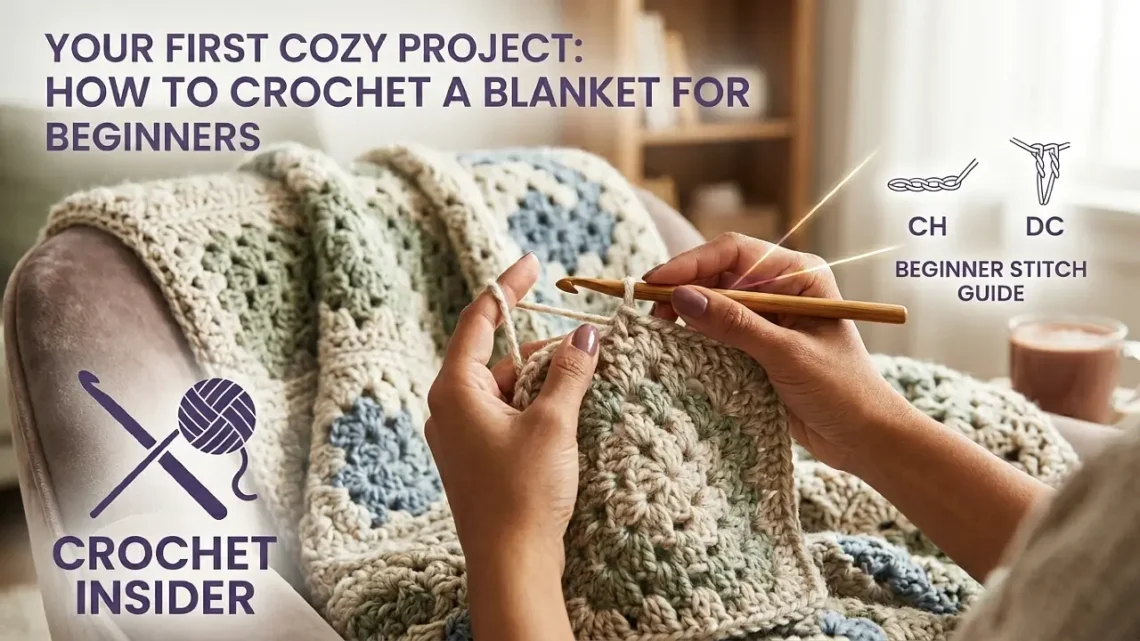
I’ll never forget the first blanket I made. It was supposed to be a baby blanket for my nephew, but I had no idea what I was doing. I used a hook that was too small, yarn that was too scratchy, and I didn’t know how to count rows. That blanket came out more like a trapezoid-shaped dishcloth. But you know what? He still used it. And I learned everything NOT to do. Now I’ve made dozens of blankets — from tiny loveys to king‑size bedspreads — and I’m going to walk you through making your first one the right way. No trapezoids. Just a cozy, beautiful blanket you’ll be proud to gift or keep.
Why a blanket is a great beginner project
A lot of people think blankets are “advanced” because they’re big. Actually, blankets are perfect for beginners. Here’s why:
- You repeat the same stitch over and over. That builds muscle memory faster than anything else. After a few rows, you won’t even have to look at your hands.
- Mistakes are easy to hide. In a blanket, a slightly uneven stitch or a tiny gap disappears into the overall fabric. No one will ever notice.
- It’s incredibly forgiving. Unlike a hat or a sweater, a blanket doesn’t have to fit anyone. If it’s a little wider here or there, it’s still a blanket.
- The feeling of finishing a blanket is unmatched. When you wrap yourself in something you made with your own hands? That’s pure magic.
If you already know how to make a chain and single crochet (from our first guide or step‑by‑step tutorial), you already know 90% of what you need for a blanket. We’ll also add one more stitch — the double crochet — which makes blankets work up much faster.
The best yarn & hook for your first blanket
Choosing the right materials for a blanket is different from choosing for a small practice swatch. A blanket takes more yarn and more time, so you want to be strategic.
My go‑to yarn for beginner blankets
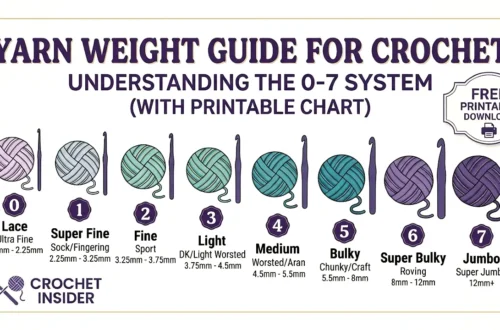
For your first blanket, I strongly recommend acrylic worsted weight (#4) in a solid, light‑to‑medium color. Not white (it shows every speck of dirt) and not black (you can’t see your stitches). Think soft grey, pale blue, sage green, or cream. Acrylic is affordable, machine washable, and comes in huge pound‑size skeins. A baby blanket might need 2–3 skeins; a lap blanket 3–4; a throw 5–6. We’ll get specific below.
A word about yarn labels
Every skein has a label with a dye lot number. If you need multiple skeins for your blanket, buy them all at once and make sure the dye lot numbers match. Different dye lots can look noticeably different, even with the same color name. Nothing worse than a blanket with a weird stripe because you ran out and bought a second skein from a different batch.
Hook size matters more than you think
For a worsted weight blanket, most yarn labels recommend a 5.0 mm or 5.5 mm hook. That’s fine for a dishcloth, but for a blanket you want a looser, softer drape. So I always go up to a 6.0 mm or even 6.5 mm. Your stitches will be more relaxed, the blanket will feel cozier, and your hands will thank you because you won’t have to fight tight stitches for hours.
How much yarn do you need? (Calculator included)
This is the number one question I get. The answer depends on the size of your blanket. Here’s a rough guide for worsted weight #4 yarn with a 6.0 mm hook:
| Blanket size | Dimensions (approx) | Yards needed | Skeins (200g / ~350 yd) |
|---|---|---|---|
| Lovey / security blanket | 12″ x 12″ (30 cm) | 100–150 yd | ½ skein |
| Baby blanket | 30″ x 36″ (76 x 91 cm) | 500–700 yd | 2–3 skeins |
| Lapghan / small throw | 36″ x 48″ (91 x 122 cm) | 800–1000 yd | 3–4 skeins |
| Throw blanket | 50″ x 60″ (127 x 152 cm) | 1200–1500 yd | 4–6 skeins |
| Twin blanket | 66″ x 90″ (168 x 229 cm) | 2000–2500 yd | 6–8 skeins |
For your very first blanket, I recommend starting with a baby blanket or lapghan. It’s big enough to feel like a real accomplishment, but small enough that you won’t get bored or overwhelmed. Plus, baby blankets make incredible gifts — and people go crazy for handmade ones.
Pro tip: buy one extra skein
Always, always buy one more skein than you think you need. You might want to make the blanket a little bigger, or you might need extra for a border, or you might just have gauge differences. Having an extra skein with the same dye lot saves so much stress. If you don’t use it, save it for your next project.
The one stitch that makes blanket magic: double crochet
If you use single crochet for a blanket, you’ll be there for a million years. Single crochet is short and dense — great for dishcloths, not great for blankets that need to work up quickly. Double crochet (dc) is the blanket hero. It’s about twice as tall as single crochet, so each row adds more height. You’ll finish your blanket in half the time.
If you haven’t learned double crochet yet, here’s a quick refresher (or see our full stitch guide):
Practice a little swatch of double crochet before starting your blanket. Chain 15, dc in the 4th chain from hook (the first 3 chains count as your first dc), then dc across. You’ll get the hang of it in 10 minutes.
Step‑by‑step: crocheting your first blanket
Let’s walk through the entire process of making a simple baby blanket using double crochet. I’ll give you a complete pattern in the next section, but first let’s understand each phase.
Phase 1: The foundation chain
Your chain determines the width of your blanket. For a baby blanket (approx 30″ wide), you’ll need a starting chain of about 85–95 chains, depending on your personal tension. Don’t stress about the exact number — the pattern will tell you a specific number. The important thing is to chain loosely. If your foundation chain is too tight, the bottom edge of your blanket will curl and pucker. If you tend to chain tightly, go up another half hook size just for the chain, then switch back to your main hook.
Phase 2: Row 1 (the most important row)
For double crochet, you’ll dc in the 4th chain from your hook. That 4th chain sounds picky, but it’s correct — the first 3 chains you skipped become your first dc. Then dc in every chain across. At the end, you’ll have a certain number of dc (the pattern tells you). Count them. If you’re off by 1 or 2, it’s fine for a baby blanket, but do note where you might have missed a chain.
Phase 3: Repeat rows forever (in a good way)
Chain 3 (turning chain, counts as first dc), turn your work, skip the first stitch (because the chain 3 is that stitch), then dc in each dc across. At the end of the row, your last dc should go into the top of the turning chain from the previous row. Repeat. And repeat. And repeat. This is the meditative part. Put on an audiobook or your favorite show and just let your hands do the work.
Phase 4: Know when to stop
Keep going until your blanket is as long as you want. For a baby blanket, aim for about 36″ (91 cm) in length. Lay your work down and measure occasionally. It’s easy to keep going and end up with a blanket that’s twice as long as you intended (ask me how I know).
Complete beginner blanket pattern (free)
This pattern makes a soft, drapey baby blanket that works up fast and looks impressive. Size: approx 30″ x 36″ (76 x 91 cm). Adjust by changing your starting chain — any multiple works.
Beginner Double Crochet Baby Blanket
Free PatternAbbreviations (US terms)
How to add a simple border (makes it look professional)
A border hides any uneven edges and gives your blanket a finished, “store‑bought” look. Even if your edges are perfectly straight (they probably won’t be — no one’s are), a border elevates the whole project. Here’s an easy single crochet border that any beginner can do.
For more border ideas (shell stitch, linen stitch, picot), check out our complete guide to crochet borders once you’re ready to experiment.
Common blanket mistakes and how to avoid them
Blankets are big, which means mistakes can multiply over many rows. Here’s what to watch for.
For more blanket‑specific troubleshooting, I wrote a whole post on fixing uneven edges and tension issues in blankets.
Should you block your blanket?
Blocking is the process of washing or wetting your finished crochet piece and laying it flat to dry in the correct shape. For acrylic blankets, blocking isn’t strictly necessary — but it does make the stitches look more even and can fix mild waviness.
For acrylic yarn: You can “kill” acrylic with steam (permanently relaxing the fibers), but I don’t recommend that for beginners. Instead, just wash your blanket on a gentle cycle and lay it flat to dry. That’s usually enough to even things out.
For cotton or wool: Wet block by soaking the blanket in cool water for 20 minutes, gently squeezing out excess (don’t twist), then pinning it to a blocking mat or towels in the correct shape. Let it dry completely. This makes a huge difference.
Honestly? Most beginners don’t block their first blanket
And that’s perfectly fine. If your blanket is for a baby or for everyday use, it’s going to be washed many times anyway. Don’t let blocking become a barrier to finishing. You can always block later.
What’s next after your first blanket
Once you’ve made one blanket, you’ll be hooked (sorry). Blankets are addictive because they’re so useful and meditative. Here’s what you might want to try next: