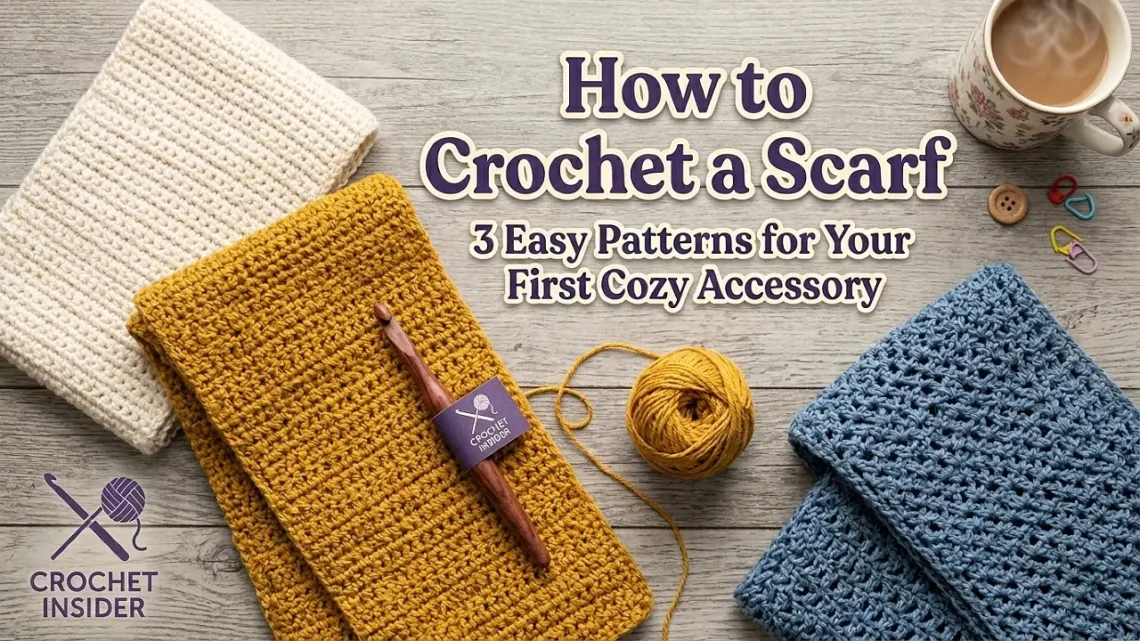
The first scarf I ever made was for my dad. I used a chunky wool blend, didn’t know what gauge meant, and the finished scarf was about nine feet long (he still wears it, wrapped around his neck three times). Scarves are the perfect “second project” after you’ve mastered the basics – they’re just rectangles, but they teach you consistency, length, and finishing techniques. In this guide, I’ll show you three easy scarf patterns: a classic double crochet scarf that works up fast, a chunky infinity scarf that’s basically a big cowl, and a ribbed scarf that looks knit but is actually crochet. Plus how to add fringe, block your scarf, and wear it with pride.
Scarf basics: length, width, yarn choice
Before we pick up our hooks, let’s talk about what makes a scarf cozy and wearable versus floppy and weird.
How long and wide should a scarf be?
| Scarf type | Width (inches) | Length (inches) | Typical use |
|---|---|---|---|
| Classic rectangular | 6‑8″ | 60‑70″ | Wrap around neck, tuck into jacket |
| Infinity / cowl | 8‑12″ | 50‑60″ circumference | Loop once or twice, no loose ends |
| Skinny scarf | 4‑5″ | 70‑80″ | Lightweight, decorative, often in lace |
| Wide blanket scarf | 15‑20″ | 70‑80″ | Oversized, can be worn as a wrap |
For your first scarf, aim for 8 inches wide and 65 inches long – that’s a very wearable, classic shape. We’ll use that as our target.
My yarn recommendations
For winter scarves: Lion Brand Wool‑Ease (wool blend, soft and warm) or Caron Simply Soft (acrylic, very drapey). For a chunky scarf: Lion Brand Thick & Quick (super bulky #6) – you’ll finish in 2 hours. Avoid scratchy wools or 100% cotton (too heavy and stiff).
Pattern 1: Classic double crochet scarf (fast & easy)
This is the scarf I recommend to everyone. It’s all double crochet, so it works up quickly. The finished fabric has a lovely drape, and you can add fringe or leave it clean.
Classic Double Crochet Scarf (approx 8″ x 65″)
Absolute beginnerThis pattern is so simple that you can crochet it while watching TV. I’ve made this scarf in solid colours, striped, and even ombre (using a yarn that gradually changes colour). It’s a wonderful gift.
Pattern 2: Chunky infinity scarf (2‑hour project)
Infinity scarves are tubes of fabric that you loop around your neck – no loose ends to tuck in. This version uses super bulky yarn and works up in a single evening.
Chunky Infinity Scarf (approx 10″ x 55″ circumference)
Beginner – works flat, seamedI made this scarf for a friend who lives in a cold climate – she wears it every single day. Super bulky yarn makes the project feel almost instant.
Pattern 3: Ribbed scarf (back loop only texture)
This scarf uses single crochet worked in the back loop only (BLO), which creates a lovely ribbed texture that looks like knitting. It’s also reversible and very warm because the fabric is denser than double crochet.
Ribbed Scarf (BLO single crochet)
Beginner (BLO stitch)This ribbed scarf is my go‑to for men’s gifts. The texture looks masculine and sophisticated, and it’s warm without being bulky.
→ Detailed BLO tutorial with photosHow to add fringe (the right way)
Fringe makes a scarf look finished and “designed.” But badly attached fringe will fall out in the wash. Here’s my method.
Step 1: Cut strands
Decide on fringe length (usually 4‑6″). Cut pieces of yarn twice that length (e.g., for 5″ fringe, cut 10″ strands). For a medium scarf, plan about 2‑4 strands per inch of width.
Step 2: Fold and insert
Take 2‑4 strands together, fold them in half. Use your hook to pull the fold through the edge stitch of the scarf. Then pull the loose ends through the fold and tighten.
Step 3: Even out
Repeat across the entire short edge of the scarf. Then trim the fringe so all ends are even. Use scissors and a ruler or just eyeball it.
Pro tip: Attach fringe before weaving in all ends – you can use the yarn tails to help secure the fringe. And never cut fringe before attaching – you’ll waste yarn and be sad.
Should you block your scarf?
Blocking means wetting or steaming your finished scarf and laying it flat to dry in the correct shape. For scarves, blocking is optional but helpful:
- Acrylic scarves: A quick steam with an iron (hovering, not touching) can relax the stitches. But not necessary.
- Wool or wool blend: Wet blocking makes a huge difference – it softens the fabric and evens out tension.
- Cotton: Wet blocking helps, but cotton can feel stiff afterward.
To block a scarf: soak in cool water for 20 minutes, gently squeeze out excess (don’t wring), lay flat on towels, and stretch/pin to your desired width and length. Let dry completely. Your scarf will look significantly more professional.
For a complete guide, see our how to block crochet projects.
Common scarf mistakes and how to avoid them
Even simple scarves can go wrong. Here’s what to watch for.
More scarf patterns to try
Once you’ve made one of these, you’ll be ready to explore:
- Lace scarf – uses chain spaces and double crochet to create airy, delicate fabric.
- Cabled scarf – uses front post stitches to mimic knit cables. Looks hard, but it’s just pattern repeats.
- Ombre scarf – use a self‑striping yarn or change colours gradually.
- Pocket scarf – sew a pocket onto each end of a wide scarf – hands go inside, very cosy.
Find all of these and more in my free pattern library.
You’ve made a scarf – now wear it everywhere
There’s no feeling quite like wrapping yourself in a scarf you made. It’s warm, it’s personal, and every time you catch your reflection, you’ll smile. Scarves also make incredible gifts – they’re one‑size‑fits‑all, and people genuinely treasure handmade accessories.
Start with the classic double crochet scarf. Make it in a colour you love. Add fringe if you’re feeling fancy. Then make one for your best friend. Then one for your mom. Before you know it, you’ll be the “scarf person” in your family, and honestly? That’s a great title to hold.